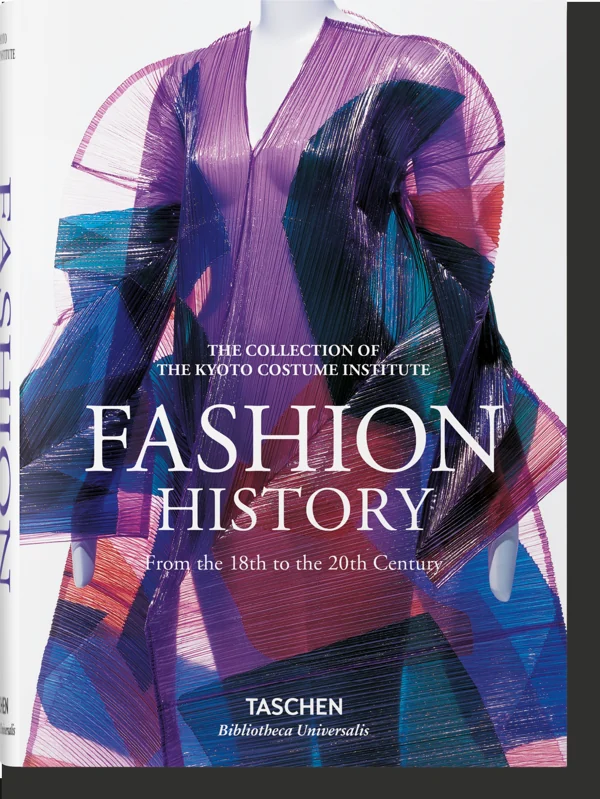
Clothing records changing relationships between craft, bodies, status and industry.
Pragmatic review
This visual survey draws on the Kyoto Costume Institute’s collection to show how garments carry historical and cultural meaning. Designers can use it as a reference for silhouette, construction and the relationship between clothing and its period. Look beyond a beautiful image to the materials, labour and conventions that made it possible.
WTM Signal Review
WTM’s judgement: a rich visual archive, with a collection’s selection boundaries. Preserved garments do not represent every person’s daily dress, and Western fashion history is not a complete global history of clothing. Pair visual inspiration with provenance and questions about whose work or experience is missing.
ONE PRACTICAL NEXT STEP
For one garment, record its material, maker, wearer and preservation history before translating it into a new design.
Reading basis and disclosure
Research-based reading note: TASCHEN description; no claim of a full-text review or inspection of the complete archive.
External institutional title. No affiliate tracking added.
TASCHEN offers different sizes and editions. Verify language, volume count and dimensions; the shelf shows a print volume.
About the author
The Kyoto Costume Institute is a Japanese nonprofit fashion research institution established in 1978. It collects, preserves, studies and exhibits Western clothing and related materials, publishing research that illuminates fashion's relationship with culture and society.
Official biography or website ↗Sources
Catalogue updated: 10 October 2026. The Webflow Press page is the editable editorial record; this portal carries the launch catalogue edition.