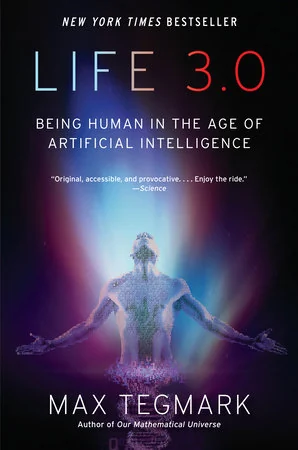
Technical capability raises questions about goals, control and the distribution of power.
Pragmatic review
Tegmark explores possible futures shaped by advanced artificial intelligence. Its pragmatic use is scenario thinking: articulate what kind of outcome is desirable, which assumptions lead there and what governance would be needed. Use the book to widen questions beyond productivity, rather than as a schedule for when a particular capability will arrive.
WTM Signal Review
WTM’s judgement: a stimulating future-oriented map, with scenarios whose probability is not established by their vividness. Separate current evidence, extrapolation and speculation. Decisions made today should remain accountable to observable conditions even when a long-term scenario is compelling.
ONE PRACTICAL NEXT STEP
Create three AI scenarios and name one decision that remains sensible across all three.
Reading basis and disclosure
Research-based reading note: publisher description; no claim of a full-text review or current capability forecast.
External title. No affiliate tracking added to the purchase link.
Originally published in 2017; technology examples should be checked against current evidence.
About the author
Max Tegmark is an MIT professor researching physics and artificial intelligence, and the founder and chair of the Future of Life Institute. His books include Life 3.0 and Our Mathematical Universe, connecting science with humanity's future.
Official biography or website ↗No personal social account verified through links on the reviewed institutional pages. @tegmark was found in search but not verified by a primary-site link. MIT Physics footer accounts belong to the department and were excluded.
Sources
Catalogue updated: 10 October 2026. The Webflow Press page is the editable editorial record; this portal carries the launch catalogue edition.