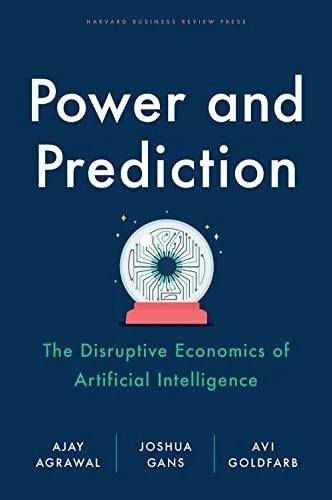
Cheaper prediction can change an entire decision system, not only one task.
Pragmatic review
The authors examine how AI’s prediction capabilities interact with judgement, workflow and organisational design. For executives, the useful shift is from buying a tool to mapping the decisions surrounding it. Identify where uncertainty currently forces a workaround, then ask what complementary changes would be necessary if prediction improved.
WTM Signal Review
WTM’s judgement: a strong economic design lens, provided prediction quality is tested in the actual setting. Reorganisation has costs, data can drift and accountability cannot be delegated to a model. Forecasting an input and deciding what should happen remain different responsibilities.
ONE PRACTICAL NEXT STEP
Map one prediction, the judgement it informs and the three process changes needed to use it responsibly.
Reading basis and disclosure
Research-based reading note: Harvard Business Review Press description; no claim of a full-text review.
External title. No affiliate tracking added to the purchase link.
Linked Harvard Business Review Press edition; verify format at checkout.
Authors and contributors
Ajay Agrawal is a Rotman School of Management professor studying the economics of artificial intelligence. He holds the Geoffrey Taber Chair in Entrepreneurship and Innovation, founded Creative Destruction Lab, and co-authored Prediction Machines.
Official biography or website ↗No personal social account verified through links on the reviewed official author page. A matching LinkedIn profile was found but withheld without primary-site-link verification. The software architect at ajayagrwal.com is a different person.
Joshua Gans is a professor at the University of Toronto's Rotman School of Management and holds the Jeffrey S. Skoll Chair. His research explores the economic drivers of innovation and scientific progress, digital strategy and antitrust policy.
Official biography or website ↗No personal social account verified through links on the reviewed official author and institutional pages. Search surfaced other profiles, but none met the primary-site-link verification rule.
Avi Goldfarb is a University of Toronto marketing professor and Rotman Chair in Artificial Intelligence and Healthcare. He studies the economics of digital technology and AI, serves as Creative Destruction Lab's chief data scientist, and co-authored Prediction Machines.
Official biography or website ↗No personal social account verified through links on the reviewed official author pages. A matching LinkedIn profile was found but withheld without primary-site-link verification.
Sources
Catalogue updated: 10 October 2026. The Webflow Press page is the editable editorial record; this portal carries the launch catalogue edition.